Living With Phantom Pain: Understanding the Sensation After Amputation
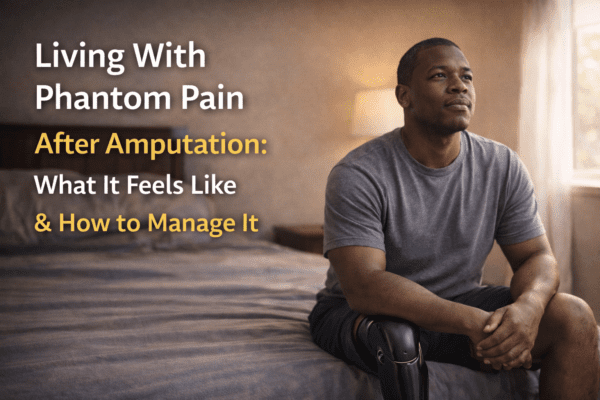
Living With Phantom Pain After Amputation: What It Feels Like & How to Manage It
Before my amputation, I had heard of phantom pain, but I didn’t truly understand what it meant. Like many things related to limb loss, it’s something most people never think about until it becomes part of their life.
From countless conversations with other amputees, one thing is clear: phantom pain is different for everyone. Some people experience little to no phantom pain at all. Others feel mild sensations that fade within the first 12 to 18 months. Rarely do I meet someone whose phantom pain is truly debilitating.
My personal experience, now four years post-amputation, is that it never fully went away — but it has become manageable. It doesn’t limit me physically, and over time I’ve adjusted my mindset to live with it. In an unexpected way, phantom pain allows me to feel connected to my foot. Most days it feels like an itch I can’t reach. Other days it’s sharp and electric. Occasionally, it feels like intense cold — the sharp tingling sensation of something “defrosting.” That’s the closest description I can give.
The people closest to me can usually tell when I’m having a bad phantom pain day. I tend to be quieter, more distant, and distracted. It’s harder to focus when the sensation is constant in the background.
Managing and Treating Phantom Pain
After an amputation, most people are prescribed medication to help manage phantom pain. I strongly encourage following your physician’s guidance and taking medication as prescribed. Many people find that medication significantly reduces phantom pain, or eliminates it entirely over time.
In my case, I had a negative reaction to the medication and stopped taking it after three or four months. Most amputees continue medication until symptoms subside or use it as needed. When taken properly, many people are able to live comfortably with minimal or no phantom pain.
Beyond medication, there are additional strategies that can help reduce symptoms:
-
Keep your residual limb warm
-
Elevate it when possible
-
Touch, tap, or lightly scratch the residual limb to give nerves alternative sensations
For me, phantom pain tends to peak in three situations: while driving, after physical activity, and at night before falling asleep.
As a right below-the-knee amputee, driving triggers phantom sensations because my brain expects my ankle and toes to engage with the pedals. After running or biking, I sometimes experience sharp pain — which usually subsides after a warm shower. At night, when I’m not wearing a prosthetic, I can manage the pain by gently tapping or touching my residual limb until the sensation fades.
One of the most important mental shifts is understanding that phantom pain, while very real in sensation, is not causing physical harm. The subconscious anxiety that tells you something is “wrong” — like twisting an ankle — doesn’t apply here. Learning to separate sensation from injury is a critical step in coping.
Some people explore alternative methods such as medical marijuana, acupuncture, or specific exercises. I haven’t personally tried these, but everyone’s journey is different, and what works for one person may not work for another.
After undergoing osseointegration surgery, I’ve noticed that my phantom pain has become easier to manage, with fewer severe days. I remain very aware of it, but it no longer dominates my life.
And finally, the simplest remedy of all — a hot shower or bubble bath. For me, nothing works better.
Try to be patient with yourself. Phantom pain is part of the journey for many amputees, but it doesn’t define you. With time, awareness, and the right tools, it can become just another manageable part of life.