How to Manage the “I’m Disabled” Stigma and Rebuild Self-Confidence
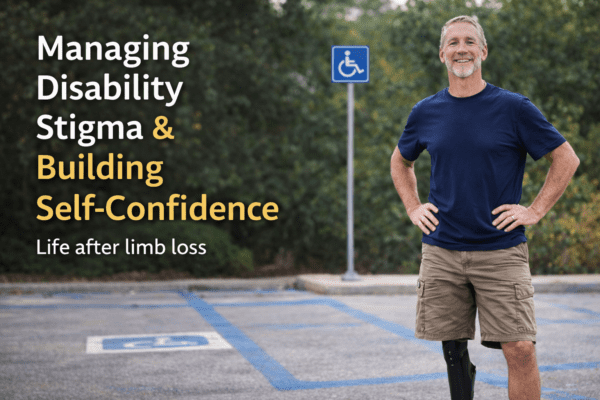
Managing Disability Stigma and Building Self-Confidence
There’s a truth many people won’t admit out loud: everyone cares what other people think. If that weren’t true, social media wouldn’t exist. People often say, “I don’t care what anyone thinks,” but in reality, most of us do — at least a little.
That said, mindset matters more than we realize. If you walk into the world expecting people to stare or judge you, that energy often shows. And when it does, people pick up on it. On the other hand, when you are at peace with your circumstances, most people around you will be too.
I made a conscious decision to own my disability and face it with positivity. That choice empowered me to live without the stigma that could have discouraged me. One rule I live by is simple: don’t assess yourself, and no one else will either.
One of my personal struggles is when people assume I can’t do something. Sometimes, that discomfort is partly my own fault — I don’t always accept help, and I don’t always know how to ask for it. That can leave people around me feeling awkward or unsure of how to help. Open communication with your inner circle — and even the people around you — goes a long way toward removing stigma and discomfort for everyone involved.
I’ll be honest: it can be embarrassing when I can’t do something that used to be easy, or when I trip — or worse, fall. Here’s something I’ve noticed. When an able-bodied person falls and isn’t injured, people laugh, check that they’re okay, maybe help pick something up, and then move on. But when a disabled person falls, everyone — including the person who fell — often pretends it didn’t happen.
That always amuses me.
Trust me, when I fall, it’s awkward, dramatic, and hard to miss. I usually pop right back up, look around to see who noticed, and maybe hear a quiet gasp from a well-meaning bystander. Then everyone suddenly looks away, pretending nothing happened — probably to spare my feelings. Friends might laugh, but strangers give me the gift of plausible deniability. And honestly? I appreciate that.
It reminds me that, at their core, most people care deeply about one another. Yes, there are exceptions, but they are not the rule.
It’s also important to acknowledge something else: almost no one chooses to be disabled. No one asks for that label, and no one wants to feel like a burden. Depending on others can be emotionally heavy, and occasional frustration is part of that reality — for both the individual and the people around them. A little patience and understanding can go a long way.
I’ll admit, there are moments when my parking placard comes in very handy. Still, it never occurred to me that someone might resent me for using a handicap spot — assuming someone else needs it more. Because of that, I often challenge myself to find the closest regular parking spot first. I call it my “willed” parking spot. When I find one — especially at the airport or grocery store — it gives me an unexpected sense of accomplishment and happiness.
Knowing I can use a handicap spot if I need to actually gives me confidence to try not to. And you’d be surprised how often that works out.
In the end, you can choose to let the word disabled define you — or you can define yourself. I’m proud of who I am, and I’ve accepted my title without letting it limit my life.
If you’re struggling with stigma, labels, or self-confidence after limb loss or disability, you’re not alone. And you don’t have to navigate it by yourself.
👉 Reach out to us at Amputee Aid. We’re here to help.